Search Knowledge Base Articles
ATB Lawrence Scott UK company profile with description
The evolution of HV coil manufacturing and induction motors
Throughout the history of high voltage induction motor manufacturing, stator coils have always been the most difficult element to manufacture to a high, repeatable quality.
At first, the use of adjustable wooden formers was commonplace as the motor industry decided upon diamond coil as the best coil type. After the initial coil looping process had been carried out, coil winders would use leather mallets to make the loop take the shape of a wooden former. Despite the coilers’ best efforts, this manual and very physical process meant consistency was hard to achieve.
The next development, and a major leap forward in coil manufacturing, was the introduction of pneumatic machines. These converted the loop into a diamond shape, however, the process was not completely automated and still required some manual refinements using solid wooden formers and mallets.
During the 1970s hydraulically operated coil pulling machines practically replaced the former and mallet method. One of the first UK companies to adopt the use of this machinery, which would later become industry standard, was induction motor specialists ATB Laurence Scott, a company which would go on to play a key role in other future advances in the UK induction motor industry.
It was still not an easy or straightforward process, as the final shape was dependent on selecting the correct radius blocks to produce the right coil but over time experienced operators were able to produce the desired results and a level of repetition that had previously been very difficult to achieve. Although the process had come a long way since the early days of mallets and formers, some profiles still required manual adjustments.
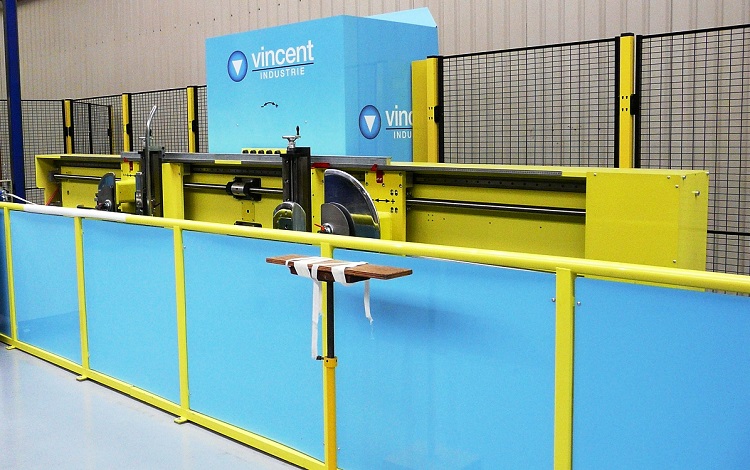
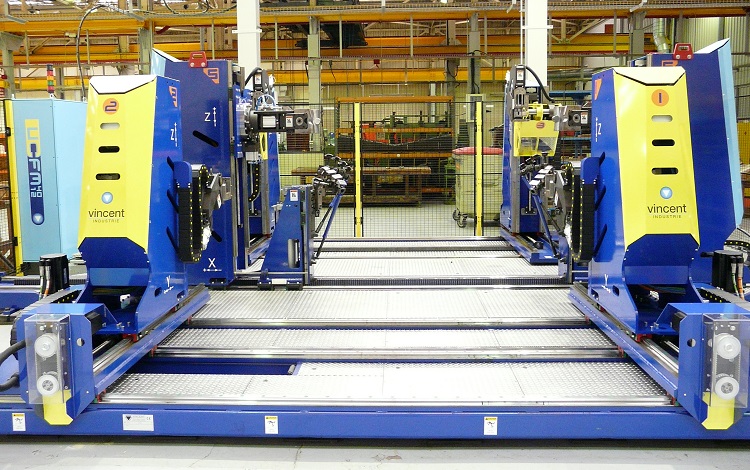
The start of the second millennium saw the introduction of coil looper and puller combination machines which have revolutionised coil manufacturing. These machines can be programmed to produce higher quality coils with a better defined and finished overhang profile that are visually more consistent and consequently much easier to wind into stators. The machine operator converts coil drawings into code which is uploaded to the machine’s console producing high quality coils with consistently regular spacing. Again, ATB was at the forefront of this industry development, and is currently the only UK motor manufacturing company to have invested in this innovative technology.
This new production process greatly reduces the possibility of any manufacturing process damage. The accurate repetitiveness of the overhang profile means the cooling air gaps between the coils are more consistent leading to a higher quality finished stator.
This enhanced level of quality provided by individual coils, combined with improved coil insulation processes, has led to coils with a longer operational life that meet the high standards demanded by the oil and gas, and nuclear new build sectors.
To find out about the training we offer, in partnership with ATB Laurence Scott, on electric motors and their manufacture, please visit the EIC's training webpage